What is an STI test? How STI & STD testing works
An STI test checks for sexually transmitted infections using a urine sample, swab, or blood test. Here's how testing works, what it checks for, and what happens next.
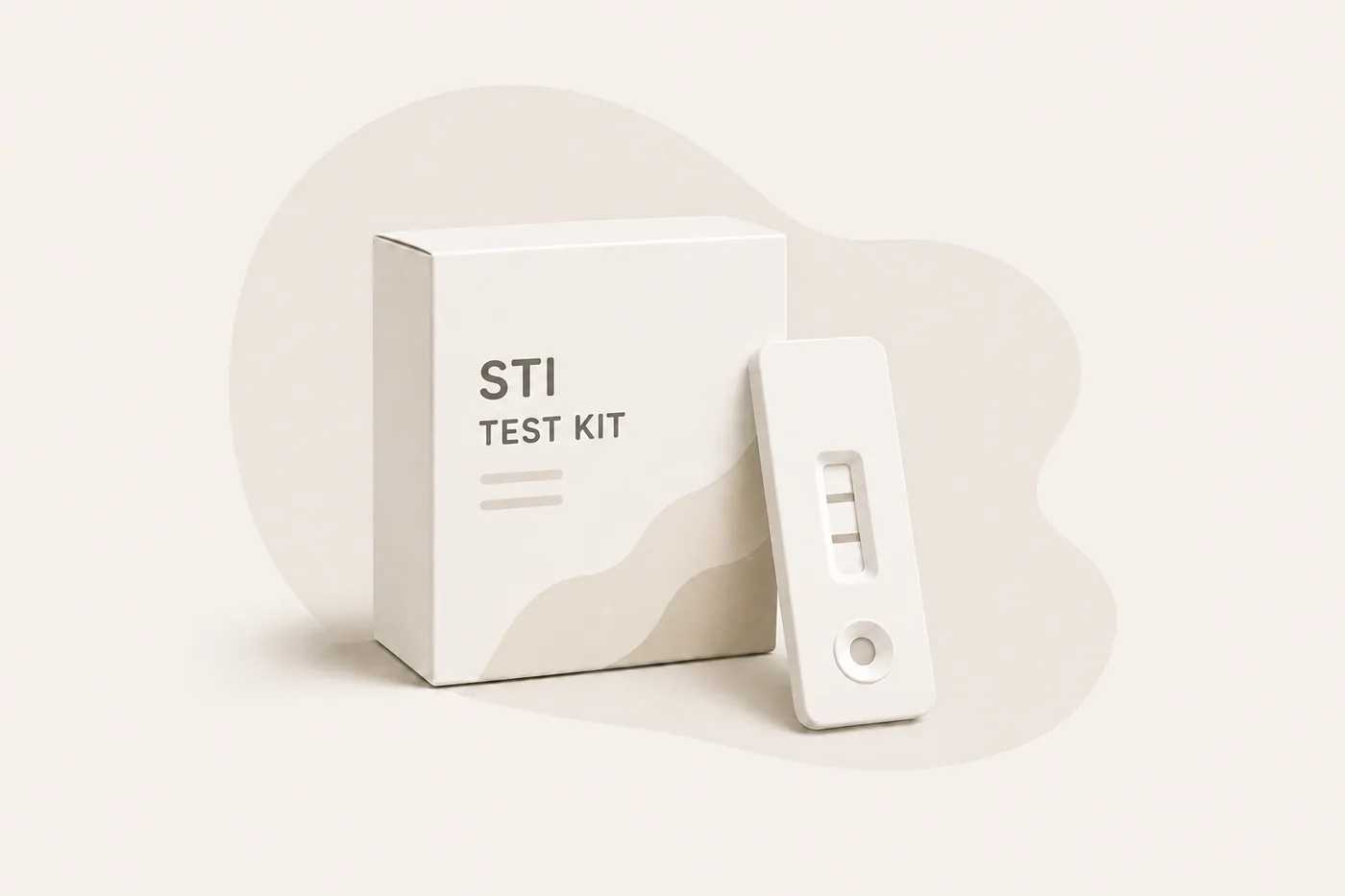
An STI test checks for sexually transmitted infections (STIs), sometimes called sexually transmitted diseases (STDs). Depending on the infection being tested for, you may need to provide a urine sample, a swab from areas such as the vagina, throat or rectum, or a blood sample.
STI testing can be done at a sexual health clinic, and some tests can also be completed at home. With a home self-sampling kit, you collect the sample yourself and send it to a laboratory for testing. With a rapid self-test, you perform the test at home and read the result yourself.
Many STIs cause no noticeable symptoms, so you can have an infection without knowing it. Testing is the only way to know for sure whether you have the infection being tested for.
Key takeaways
- An STI test checks for infections passed on through sex. STI and STD mean the same thing. STI is the term doctors use now.
- STI tests can use urine, swabs or blood.
- No single STI test checks for every infection.
- You can have an STI without symptoms.
- Testing too early can give a false negative.
- You can test at a clinic, through your GP, or with a home test kit.
- Rapid self-tests can give a result within minutes. Self-sampling kits are sent to a laboratory.
- NHS STI testing is free. Private tests are paid for but can be quicker to arrange.
- STI diagnoses in England reached 334,151 in 2025, so regular testing matters.
How does an STI test work?
An STI test uses one or more of the following methods, depending on which infection is being checked for.
- Urine sample. You provide a sample in a cup. Urine samples can be used to check for chlamydia and gonorrhoea.
- Swab. A soft swab (resembling a large cotton bud) collects a sample from the vagina, penis, throat, or rectum. Many swabs, including vaginal swabs, can be taken by you rather than a clinician. Swabs are commonly used to test for chlamydia and gonorrhoea, and can also be used for genital herpes when a visible sore or blister is present.
- Blood sample. A small blood sample, taken from your arm or with a finger-prick, can be used to test for HIV, syphilis, and hepatitis. Blood tests for HSV-1 and HSV-2 antibodies are also available. Both HSV-1 and HSV-2 can cause genital herpes, although a swab from a visible sore or blister is usually used to test genital herpes.
- Physical exam. A doctor or nurse may examine the genital area if needed. This can help identify conditions such as genital warts and pubic lice. Genital warts are caused by certain types of HPV, but this is different from HPV testing through cervical screening.
Testing at a sexual health clinic
At a sexual health clinic, a doctor or nurse will ask about your sexual history and any symptoms to work out which STI tests you need. They may also examine your genitals or anus if needed. You can ask for a chaperone or a clinician of a particular gender if that makes you more comfortable.
You do not need to give your real name or tell the clinic which GP surgery you use. Details of your visit are not normally shared with your GP or anyone outside the clinic unless you ask for this.
Testing through your GP
You can see your GP if you think you may have an STI, but they are likely to refer you to a sexual health clinic for testing. You do not need a GP referral to attend a sexual health clinic.
Testing with a home test kit
Home STI testing lets you collect a sample or complete a test yourself at home. There are two main types.
- A self-sampling kit gives you everything you need to collect your own sample, which may include urine, a swab or a finger-prick blood sample. You then send the sample to a laboratory for testing and receive your results online or by text within about a week.
- A rapid self-test works differently. You collect the sample, perform the test and read the result yourself, often within minutes.
What does an STI test check for?
An STI test can check for one or more sexually transmitted infections, but no single test checks for every STI.
The infections most commonly included in STI testing are:
- chlamydia
- gonorrhoea
- HIV
- syphilis
Testing may also be available for:
- hepatitis A
- hepatitis B
- hepatitis C
- Mycoplasma genitalium
- trichomoniasis
The latest UKHSA sexual health surveillance report includes testing for these infections in sexual health services in England. Chlamydia is the most commonly diagnosed STI in England, making up 45.2% of all new diagnoses in 2025.
Other conditions, including genital herpes and genital warts, are not usually part of routine STI testing and are checked in different ways, often only if you have symptoms.
How soon after sex should I test?
Testing too soon after sexual contact can give a negative result even if an infection is present. This is because it can take time for an STI to reach detectable levels. This period is known as the window period.
| Infection | Recommended window period |
|---|---|
| Chlamydia | 2 weeks |
| Gonorrhoea | 2 weeks |
| HIV | 45 days to 90 days, depending on the type of test being used |
| Syphilis | 12 weeks |
| Hepatitis B | 12 weeks |
| Hepatitis C | 12 weeks |
If you test before the recommended window period and get a negative result, you may need to test again once the window period has passed. If you have symptoms or know that a recent sexual partner has an STI, contact a sexual health clinic rather than waiting for the window period to end.
If you may have been exposed to HIV within the last 72 hours, seek urgent advice about PEP (post-exposure prophylaxis), medication that can reduce the chance of HIV infection after exposure. It should be started as soon as possible, ideally within 24 hours and no later than 72 hours after exposure. PEP is available from sexual health clinics and A&E.
How long do results take?
If you are tested at a sexual health clinic, some STI test results may be available the same day, while others can take around one to two weeks. It depends on the test being used.
Home self-sampling kits are sent to a laboratory, so results usually take several days after the sample is received. Rapid self-tests taken at home give a result within a few minutes.
What happens if my result is positive?
If your STI test is positive, a clinician will explain your result and any treatment you need. Many bacterial STIs can be treated with antibiotics, while other infections, such as HIV, can be managed with ongoing treatment.
If you get a positive result from a rapid self-test at home, book a follow-up test with a sexual health clinic to confirm the result before treatment is started.
You will usually be advised to tell recent sexual partners so they can get tested and treated if needed. If you would rather not contact them yourself, a sexual health clinic can usually do this without revealing your identity. This is called partner notification.
Having had an STI before does not necessarily protect you from getting it again, so repeat testing may be needed if you are exposed again.
Is STI testing free in the UK?
Testing through the NHS, at a sexual health clinic or via your GP, is free. Some GP surgeries, pharmacies and young people's services also offer free testing.
Free home STI testing is also available in some areas through NHS-funded services such as Sexual Health London, although availability depends on your postcode and local service.
Private STI tests from pharmacies and online providers are paid for, but can be quicker to arrange and offer more choice over which infections you test for. Rapid self-tests available from private providers can also give you a result at home within minutes.
Are home STI test kits accurate?
Home STI test accuracy depends on the infection, the test being used and whether the instructions are followed correctly.
Laboratory self-sampling kits can be very accurate because the sample is analysed in a laboratory.
Rapid self-tests can also perform very well, but accuracy varies between products.
Following the test instructions carefully and testing after the appropriate window period are also important for getting a reliable result. A positive rapid self-test should be followed up with a sexual health clinic where confirmatory testing is needed.
Frequently asked questions
What is the difference between an STI and an STD?
STI means sexually transmitted infection and STD means sexually transmitted disease. The terms are often used interchangeably but STI is the term most doctors use now, because you can carry an infection without it ever causing symptoms or disease.
Can I get an STI test if I have no symptoms?
Yes. Many STIs cause no noticeable symptoms, so you can have an infection without knowing it.
How soon after unprotected sex can I test?
It depends on the infection. Wait at least 2 weeks for chlamydia and gonorrhoea and 12 weeks for syphilis. For HIV, the window period is usually around 45 to 90 days, depending on the type of test. If you test too early and get a negative result, you may need to test again later.
Can I do an STI test at home?
Yes. A home self-sampling kit lets you collect a sample and send it to a laboratory. A rapid self-test is completed entirely at home and can give a result within minutes.
Are home STI tests as accurate as clinic tests?
Home STI tests can be highly accurate when used correctly, but accuracy depends on the test. Lab-processed self-sampling kits can offer accuracy comparable to clinic testing, while rapid self-tests vary by product. Testing at the right time and following the instructions carefully are important for getting a reliable result. A positive rapid self-test may need confirming with a follow-up test.
Is STI testing free in the UK?
Yes. NHS STI testing is free. Some GP surgeries, pharmacies, young people's services and NHS-funded home testing services also offer free STI testing, depending on your area. Private kits from pharmacies and online providers are paid but often faster to arrange and may offer rapid results.
How long do STI test results take?
At a sexual health clinic, some results are available the same day, while others can take one to two weeks. Home self-sampling kits take several days to process, while rapid self-tests can give a result within minutes.
What happens if I test positive?
A clinician can explain any treatment or follow-up you need. If a rapid self-test is positive, book a follow-up test with a sexual health clinic to confirm the result. Recent sexual partners may also need testing or treatment.
References
- Let's Talk About It. "Testing for STIs." Let's Talk About It, letstalkaboutit.nhs.uk/stis/testing-stis. Accessed 26 Aug. 2026.
- NHS. "Chlamydia." NHS, 24 Oct. 2024, nhs.uk/conditions/chlamydia.
- NHS. "Find Sexually Transmitted Infection (STI) Testing and Treatment." NHS, 31 July 2024, nhs.uk/nhs-services/sexual-health-services/find-sti-testing-and-treatment.
Show all references
- NHS. "Genital Herpes." NHS, 27 June 2023, nhs.uk/conditions/genital-herpes.
- NHS. "Genital Warts." NHS, 10 July 2023, nhs.uk/conditions/genital-warts.
- NHS. "Gonorrhoea." NHS, nhs.uk/conditions/gonorrhoea.
- NHS. "Human Papillomavirus (HPV)." NHS, 10 Mar. 2026, nhs.uk/conditions/human-papilloma-virus-hpv.
- NHS. "Pubic Lice." NHS, 15 May 2026, nhs.uk/conditions/pubic-lice.
- NHS. "Sexually Transmitted Infections (STIs)." NHS, 13 May 2024, nhs.uk/conditions/sexually-transmitted-infections-stis.
- NHS. "Visiting a Sexual Health Clinic." NHS, 22 Feb. 2023, nhs.uk/live-well/sexual-health/visiting-an-sti-clinic.
- Sexual Health London. Sexual Health London, shl.uk. Accessed 26 Aug. 2026.
- Terrence Higgins Trust. "PEP (Post-Exposure Prophylaxis) for HIV." Terrence Higgins Trust, 11 June 2026, tht.org.uk/hiv/protection/pep-post-exposure-prophylaxis-hiv.
- UK Health Security Agency. "Sexually Transmitted Infections and Screening for Chlamydia in England: 2025 Report." GOV.UK, 2 June 2026, gov.uk/government/statistics/sexually-transmitted-infections-stis-annual-data-tables/sexually-transmitted-infections-and-screening-for-chlamydia-in-england-2025-report.
- World Health Organization. "Herpes Simplex Virus." World Health Organization, 30 May 2025, who.int/news-room/fact-sheets/detail/herpes-simplex-virus.